Blue Mosque Tickets

Plan your visit to the Blue Mosque

The Blue Mosque is free to enter but pauses tourist access five times daily for prayer, each closure lasting approximately 90 minutes. On Fridays, the mosque stays closed to visitors until around 2:30pm. Most visits take 30 to 45 minutes inside the prayer hall, but arriving mid-closure is the single most common planning mistake. This guide covers the tourist entrance, how prayer timing affects your schedule, dress code requirements, and how to choose between the mosque's guided tour and combo options.

Quick overview: Blue Mosque at a glance

  • When to visit: Open daily from 8:30am. Tourist access pauses during five daily prayers, each approximately 90 minutes. Hours run to around 7pm in summer (May through September) and 5pm in winter (October through April). Check the posted board at the south entrance before joining the queue.
  • Getting in: Entry is free. Guided tours start from €10; combos from €24. Book a few days ahead April through September if you want a specific tour departure.
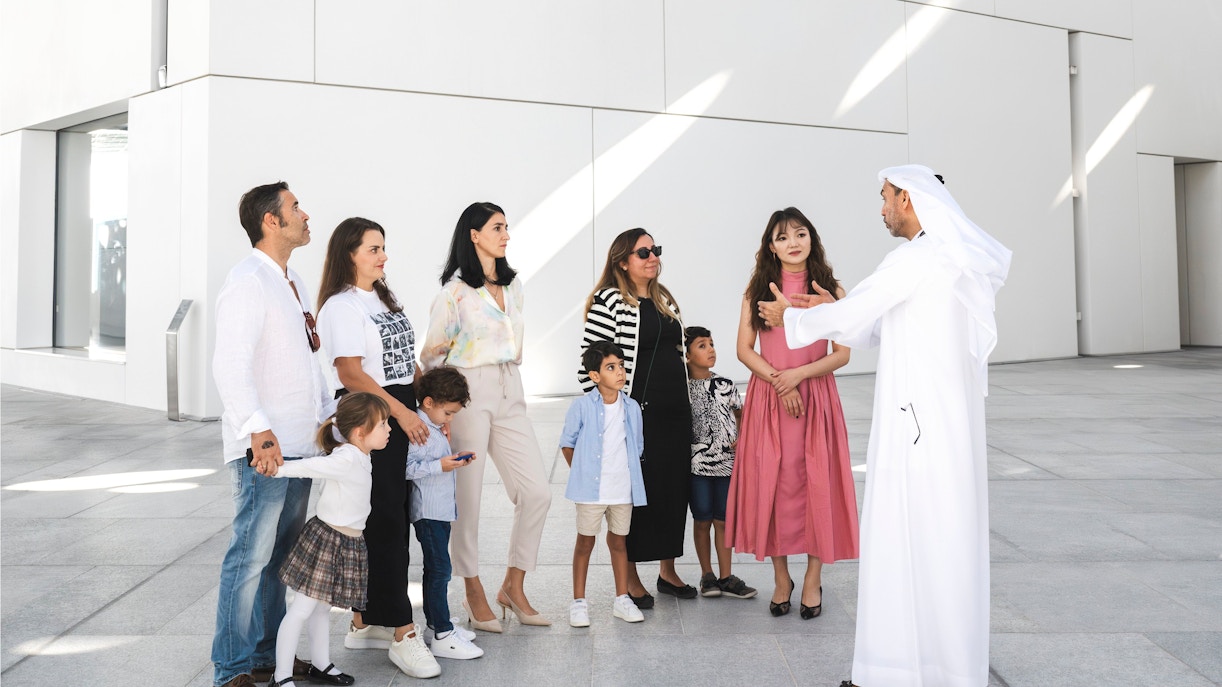
  • How long to allow: 30 to 45 minutes for most visitors covering the courtyard and prayer hall. A guided tour adds 30 to 45 minutes and makes the tilework, domes, and calligraphy legible rather than overwhelming.
  • When to go: Early weekday mornings before 9am are noticeably calmer than late-morning arrivals during June through August. Avoid Friday mornings entirely: tourist access is restricted until approximately 2:30pm.
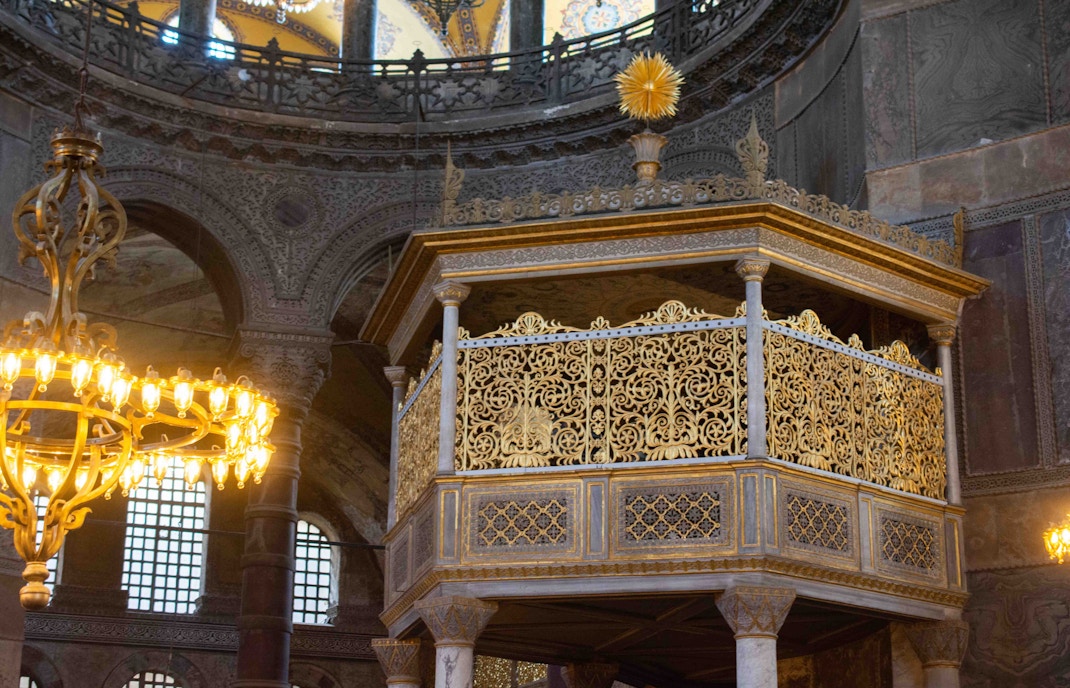
  • What most people miss: The outer courtyard's arcaded colonnades and octagonal fountain before rushing inside; and the Sultan's Lodge in the southeast of the prayer hall, easy to overlook once groups cluster beneath the central dome.

🎟️ Guided tour slots for Sultanahmet combos fill faster during April through September. The mosque itself has no capacity limit, but fixed-departure tours run to their own schedules. If you want a specific timeslot, book a few days ahead.

→ See tour options

Jump to what you need

Where is the Blue Mosque located?

Where and when to go

💡 Pro tip: Check the prayer timetable board at the south entrance before joining the queue. Prayer closures run approximately 90 minutes each and are not announced until you are already waiting. Arriving 20 minutes after a reopening gives you a clean window with lighter crowds and better light through the stained-glass windows.

⚠️ Blue Mosque south entrance

People approach tourists claiming the mosque is closed for cleaning or a ceremony, then offer to take them to a nearby shop or tea house. The mosque is almost never closed beyond its five daily prayers — times are posted on the board at the entrance. Always check the board yourself before leaving. Book guided tours only through verified platforms.

Which Blue Mosque ticket is right for you?

ExperienceWhat's includedBest forPrice

Blue Mosque Essential Guided Tour

Licensed guide, approximately 45–60 minutes; prayer hall circuit with tilework, calligraphy, and architectural context

A first visit where understanding the space adds more than photographs alone, without a long fixed group schedule

From €10

Blue Mosque Guided Tour with Options

Expert guide; some variants include Sultanahmet Square context and small-group formats

Visiting June through August when guided orientation makes the interior meaningful rather than crowded and confusing

From €16

Blue Mosque + Basilica Cistern: Guided Tour + Skip-the-Line

Guided Blue Mosque tour and skip-the-line Cistern entry with audio guide

A half-day in Sultanahmet when queuing separately at Basilica Cistern would cost 45 minutes or more during June through August

From €70

Hagia Sophia Ticket + Blue Mosque Audio Guide

Hagia Sophia visitor entry and audio guides for both sites

Covering both Sultanahmet landmarks in one morning without joining a fixed-departure group

From €32

Blue Mosque + Bosphorus Cruise

Guided mosque tour and Bosphorus sightseeing cruise with multilingual audio

Pairing the Old City visit with an afternoon on the water on the same day

From €24

How do you get around the Blue Mosque?

The Blue Mosque is a single enclosed complex best understood in sequence: the outer courtyard leads to the inner courtyard, and the inner courtyard leads to the prayer hall. There is no floor plan to navigate; the visit flows naturally and takes one direction.

💡Pro tip: Walk the prayer hall edges rather than stopping beneath the central dome first. The İznik tiles are on the upper walls and read best when scanned section by section from a slight distance. Stopping in the center blocks traffic and compresses your field of view.

What are the most significant spaces in the Blue Mosque?

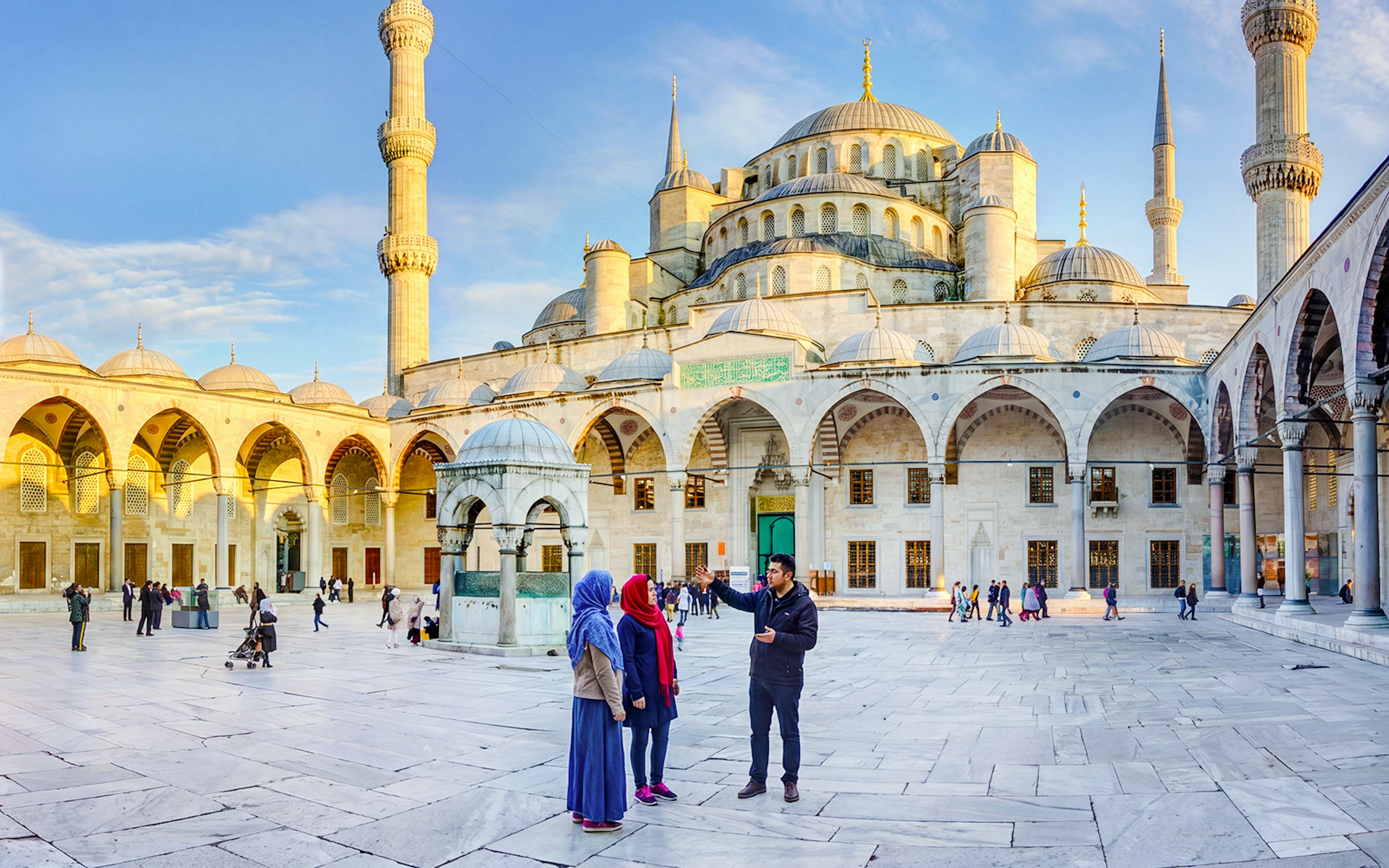
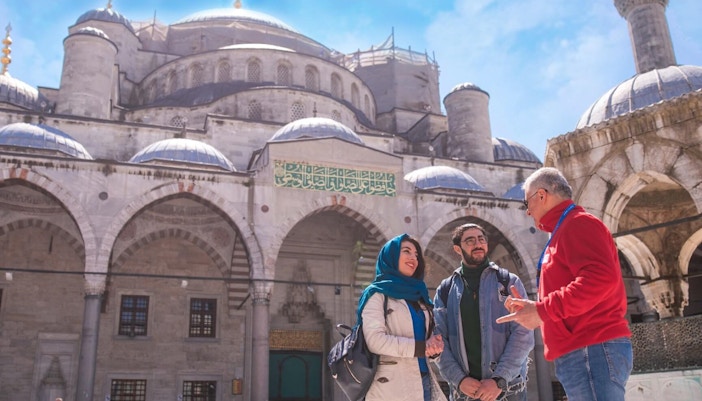
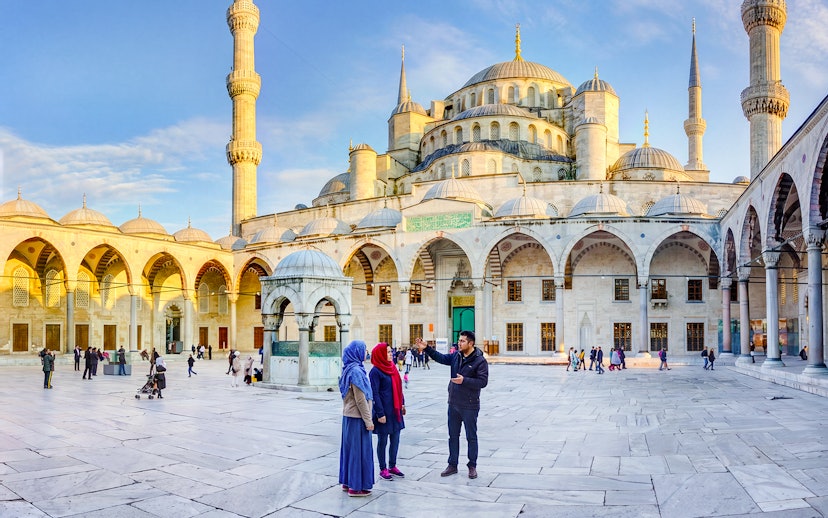
Visitors exploring the courtyard of the Blue Mosque in Istanbul, Turkey.
Blue Mosque in Istanbul with visitors walking in the courtyard.
Visitors exploring the courtyard of the Blue Mosque in Istanbul, Turkey.
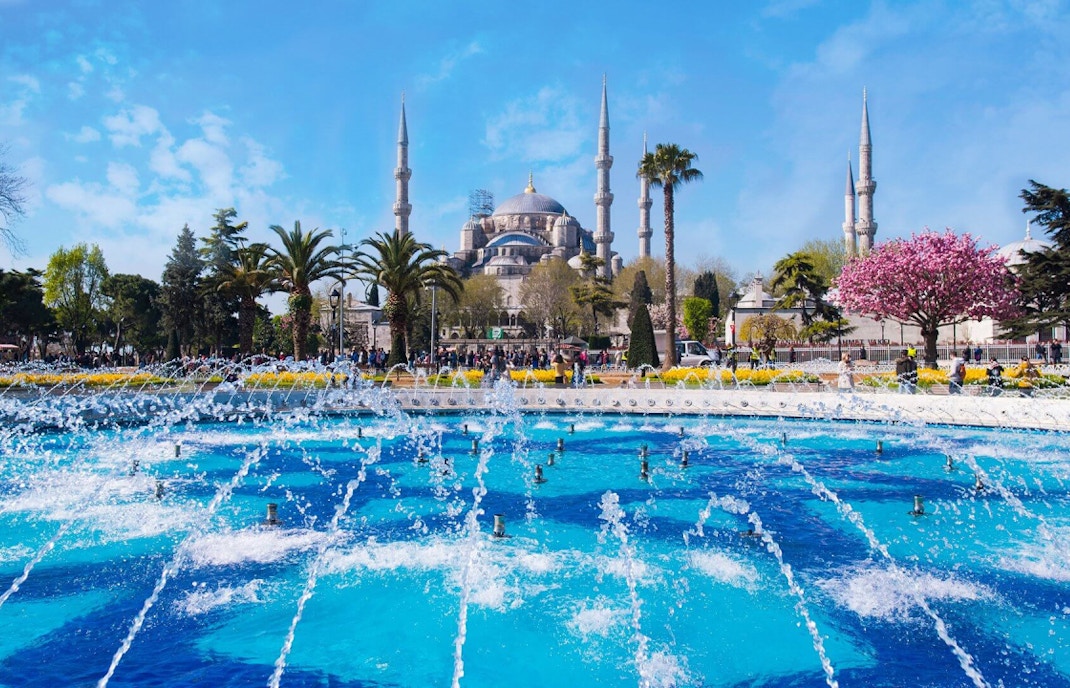
Blue Mosque exterior with minarets and domes, Istanbul skyline and Bosphorus in background.
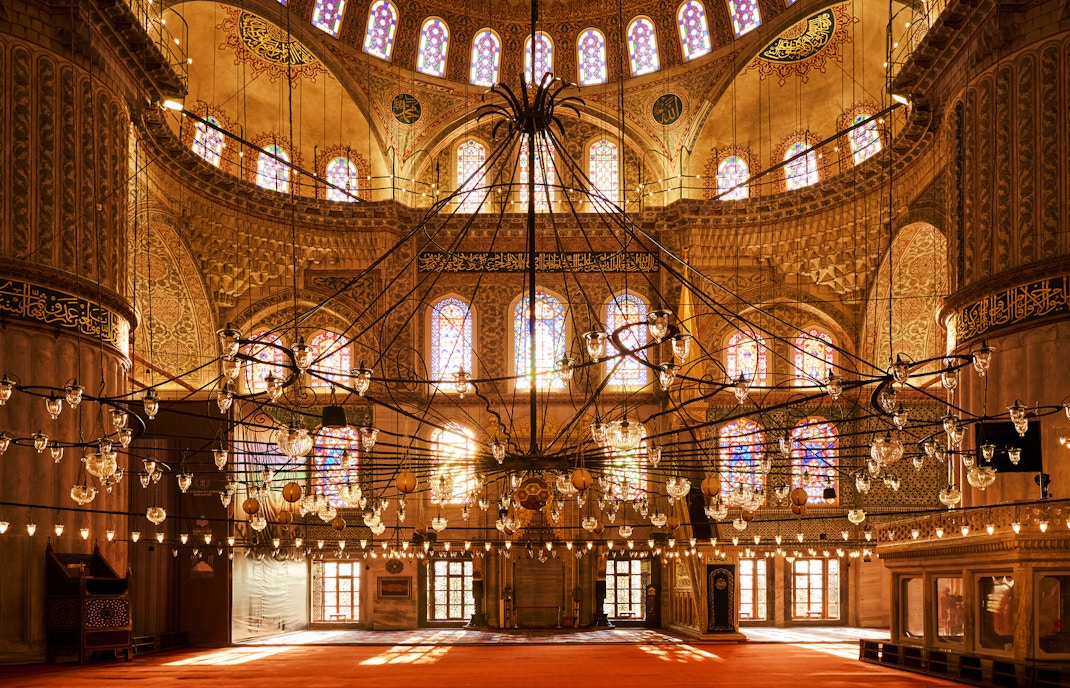
Blue Mosque interior with ornate blue tiles and central chandelier, Istanbul.
Stained glass windows and ornate mihrab inside the Blue Mosque, Istanbul.
1/6

Outer courtyard

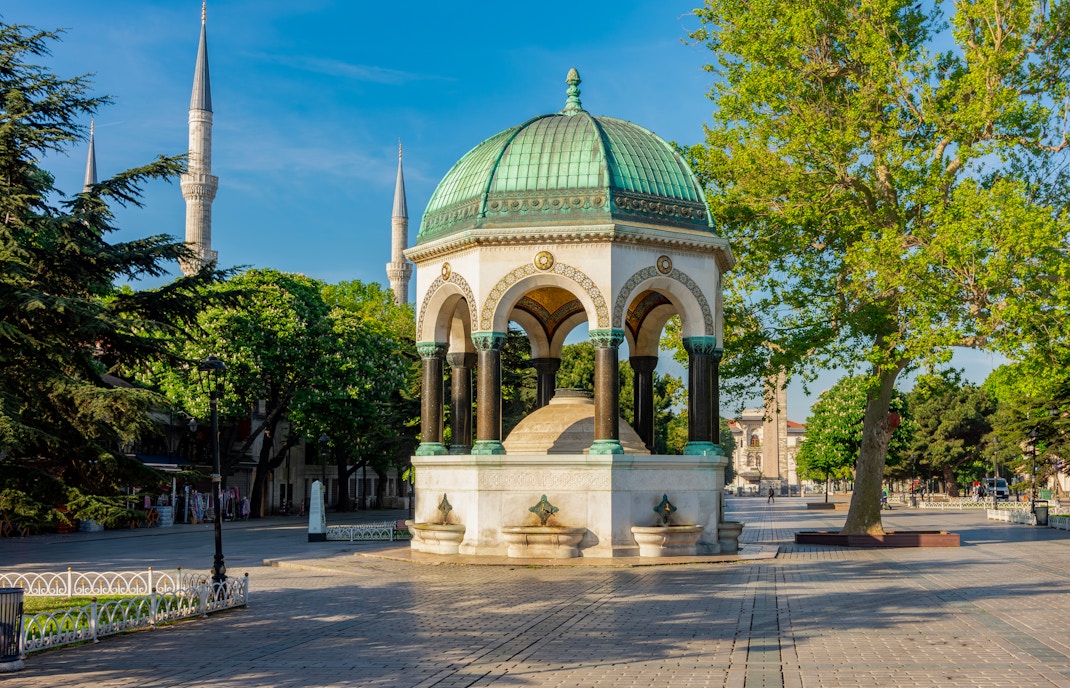
The open courtyard sets the spatial scale of the complex. The arcaded perimeter, octagonal ablution fountain, and small cascading domes create the transition from busy square to active mosque. Most visitors rush through to reach the interior; take time here to understand the full compound before entering.

Pro tip: Go early for quieter photos and a clearer first look at the exterior minarets.

Six minarets

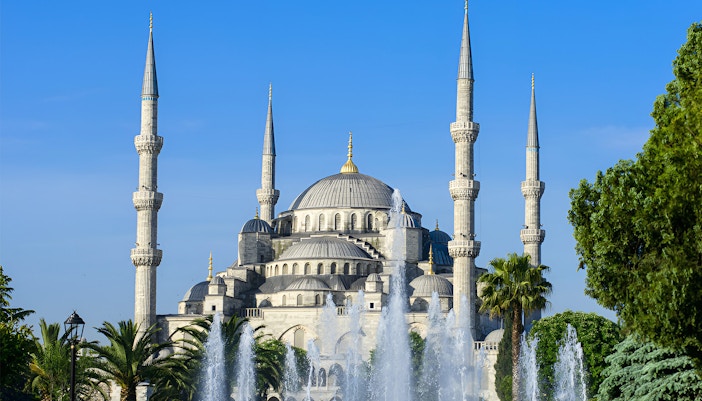
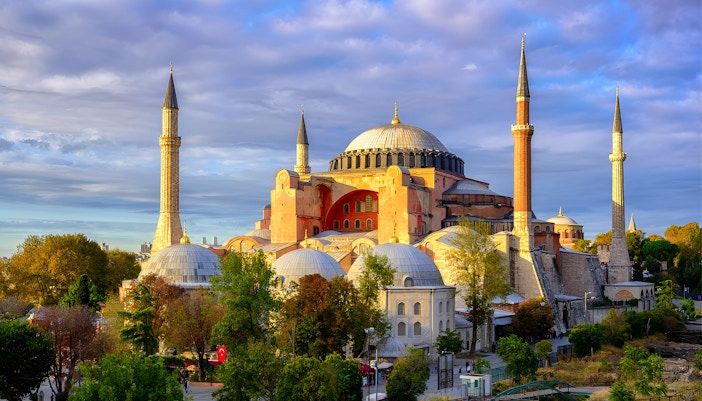
The Blue Mosque is one of a very small number of mosques with six minarets, a feature that caused historical controversy at its completion in 1616. Step back to Sultanahmet Square to see all six clearly framing the main dome from a distance.

Pro tip: The plaza between the Blue Mosque and Hagia Sophia gives the widest angle. Return at dusk for the illuminated exterior.

Central prayer hall

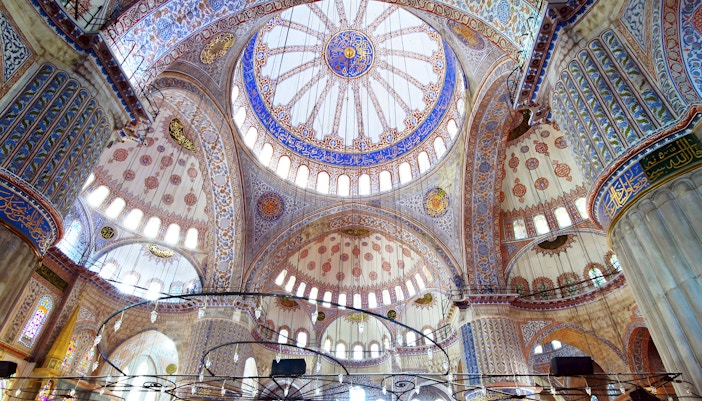
The carpeted hall is still an active place of worship and immediately communicates this. Look upward first: the space operates through height, filtered light, and symmetry. The chandeliers hanging low once held ostrich eggs, historically used to prevent spiders from nesting. Stand near the rear boundary for the fullest unobstructed view.

Pro tip: Pause near the rear wall for the widest sightline; closer positions compress the domes above you.

Main dome and semi-domes

The main dome (23 metres in diameter) rises above four semi-domes, creating the mosque's characteristic cascading interior silhouette. This layering is what draws the eye upward in stages rather than landing on a single focal point.

Pro tip: Stand near the center of the visitor area and look straight up for the clearest sense of the dome's scale.

İznik tiles

More than 20,000 hand-painted İznik tiles cover the upper interior walls, giving the mosque its blue-toned identity. Cobalt, turquoise, and green floral patterns were individually applied and cleaned during the 2015–2023 restoration without damaging the glaze.

Pro tip: Walk slowly along the prayer hall perimeter and scan the upper walls section by section. The detail only resolves at moderate distance, not from the center.

Mihrab and minbar

The marble mihrab at the far end of the hall marks the direction of prayer toward Mecca. The minbar (pulpit) stands to its right. Both are within view from the visitor boundary and represent the prayer hall's architectural focal point.

Pro tip: Approach slightly off-center to catch the depth of the mihrab's carved niche. Flash is not permitted in this area.

💡 Don't leave without seeing

The Sultan's Lodge in the southeast corner of the prayer hall (elevated gallery with carved screens, easy to miss once tour groups occupy the center of the room) and the outer courtyard fountain up close, not just in passing.

Facilities and accessibility

Rules and restrictions

⚠️ Dress code is enforced at the entrance with no exceptions. Shorts are the most common reason visitors are stopped at the door, affecting men and women equally. A wrap or scarf tied around the waist resolves the requirement for most clothing. Women should bring their own headscarf; loaner scarves are available but the queue to collect them on a busy summer morning is real.

Brown leather dress shoes and folded blue sweater, suitable for Moulin Rouge dress code.

Practical tips

  • The prayer timetable changes daily and is posted at the south entrance. Check it before joining any queue. A 90-minute closure is a long wait on a full travel day: the difference between arriving 15 minutes before a reopening versus 15 minutes before a closure is the difference between a smooth visit and an avoidable delay.
  • If the mosque is closed when you arrive, the outer courtyard is still worth exploring. The octagonal fountain, arcaded perimeter walk, and the exterior view of all six minarets from the courtyard gate are substantial enough to occupy 15 to 20 minutes without the interior.
  • For İznik tile photography, overcast summer days reduce window glare; bright mornings create the most dramatic stained-glass light but can wash out tile color in direct shots. Moving slowly along the prayer hall perimeter and angling slightly toward the upper walls gives the best tile results.
  • Travel with only a small bag through the mosque. Security bag checks at the south entrance are standard, and a large daypack extends your processing time through the entry flow. If you are on a full-day Old City itinerary, store larger bags before arriving.
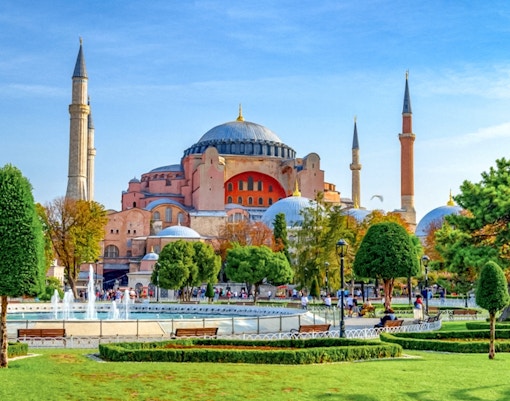
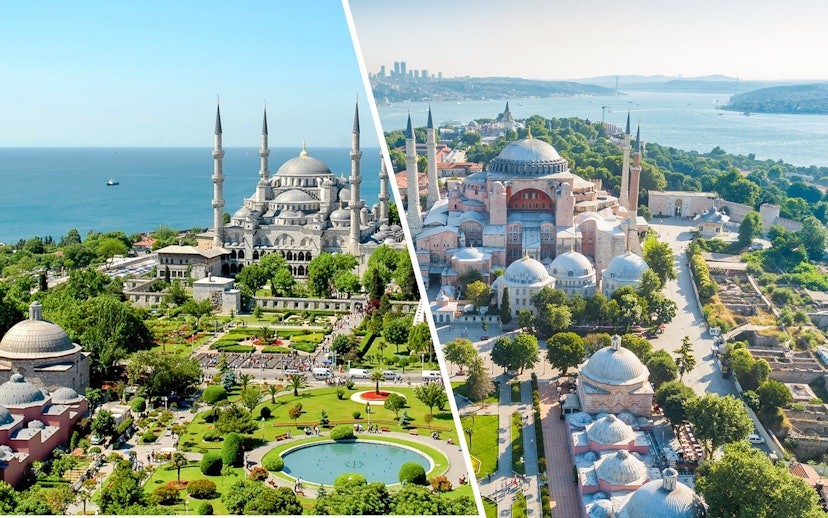
  • From outside, the most useful viewing position is the park between the Blue Mosque and Hagia Sophia. At dusk, the mosque is illuminated and all six minarets are visible together in one frame. This is a worthwhile stop after the interior visit even if the mosque is closed for prayer.
  • Socks are practical for shoes-off entry. The carpeted prayer hall floor is shared by many visitors throughout the day.

What else is worth visiting nearby?

Commonly paired with the Blue Mosque

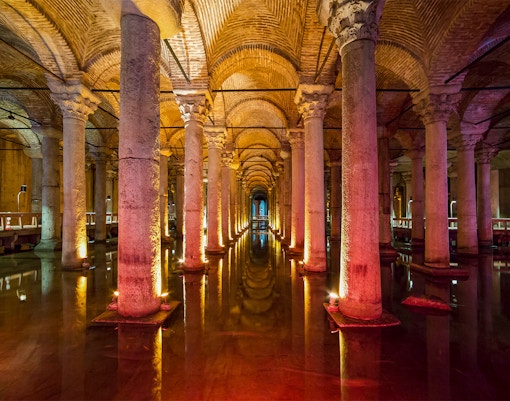
✨ The Blue Mosque and Basilica Cistern together, on a combo that includes skip-the-line Cistern entry, is the most practical half-day Sultanahmet option. The Cistern is where the queue time is longest and where the time-saving has the most real impact on your day.

→ See combo options

Eat, shop and stay near the Blue Mosque

Frequently asked questions about visiting the Blue Mosque

The mosque is open to visitors throughout the day. We recommend visiting between 9 am to 6 pm, except during Blue Mosque prayer times, when the mosque is closed to non-worshippers.

More reads