1609-1616
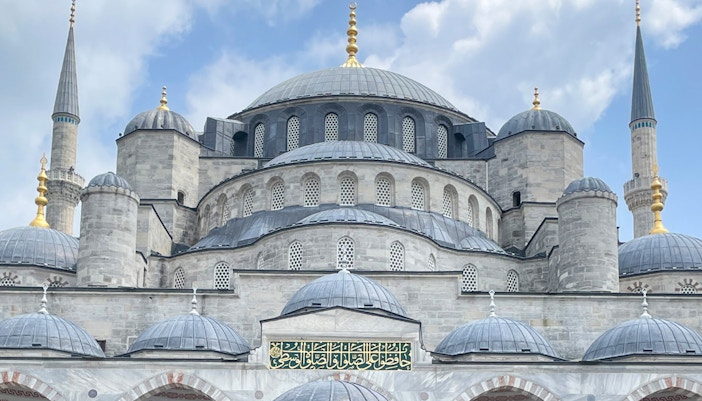
Commissioned by Sultan Ahmed I to revive Ottoman grandeur after military setbacks, the Blue was designed by renowned Ottoman architect Mehmet Aga. It is celebrated for its intricate designs and mastery of light and space. Its construction began in 1609 and lasted seven years, engaging thousands of skilled artisans and laborers. The result is a breathtaking architectural gem, a testament to the resilience and artistic prowess of the Ottoman Empire during its cultural zenith.
Unveiling Blue Mosque’s history in the Ottoman Empire | From construction to completion
Blue Mosque | A mesmerizing architectural masterpiece
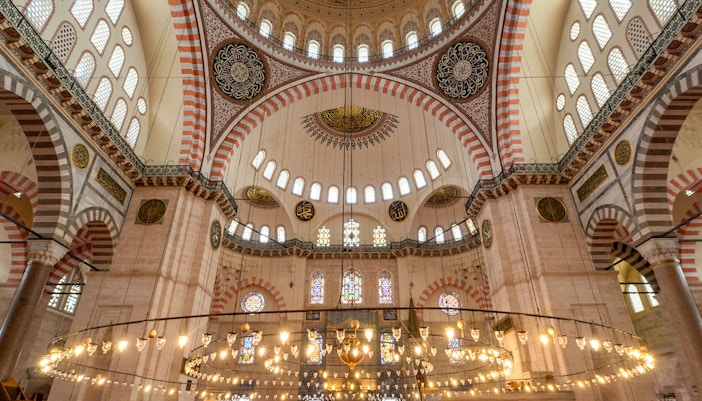
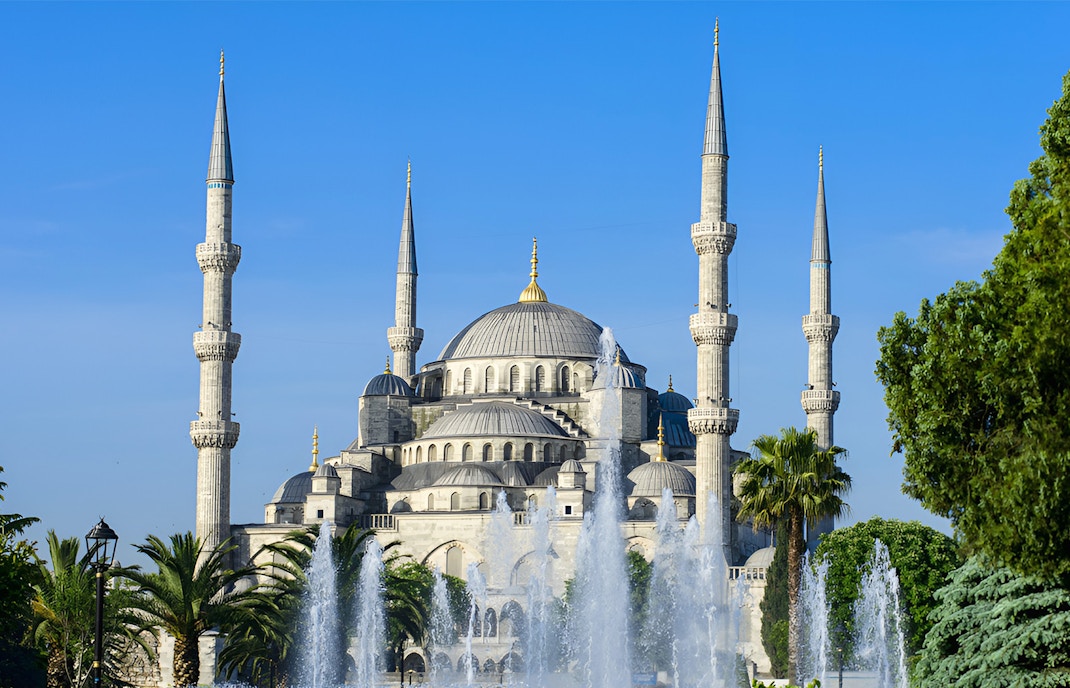
The Blue Mosque, officially named the Sultan Ahmed Mosque in Istanbul, is a stunning architectural marvel built between 1609 and 1616 during the reign of Sultan Ahmed I. It’s known for its intricate blue tiles and six minarets. Visitors are drawn to its serene atmosphere, impressive domes, and exquisite calligraphy. Exploring this historic site provides a rich cultural experience, blending Ottoman and Islamic artistry.
Blue Mosque timeline
- 1609: Construction of the Blue Mosque begins under the reign of Sultan Ahmed I.
- 1610 to 1612: With the foundation secured, construction of the walls and interior spaces commenced.
- 1613 to 1616: The grand dome, arches, Iznik tiles, and stained glass windows were added to the Blue Mosque.
- 1616: The Blue Mosque is completed and opened for prayer.
- 1617: Sultan Ahmed I passes away shortly after the mosque's completion.
- 1934: The Blue Mosque undergoes a major restoration project.
- 1952: The Blue Mosque is reopened to the public following the restoration.
- 2023: The Blue Mosque continues to serve as a place of worship and a popular tourist attraction.
Blue Mosque history explained
Origins and construction
Completion and dedication
1617
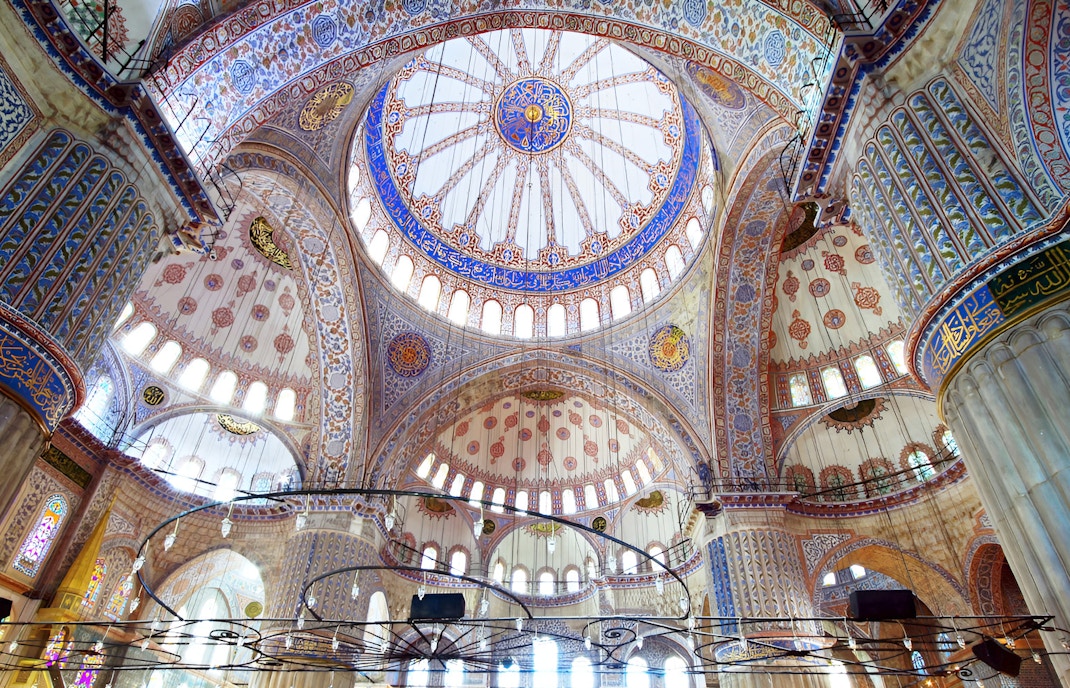
Completed in 1616, just before Sultan Ahmed I's passing in 1617, the Blue Mosque stands as a testament to Ottoman architectural prowess. Dedicated to Sultan Ahmed I, it became a prominent symbol of his reign. The mosque's completion marked the culmination of a vision that now endures as a timeless representation of Ottoman grandeur and artistic achievement.
Restoration and preservation
1934-1952
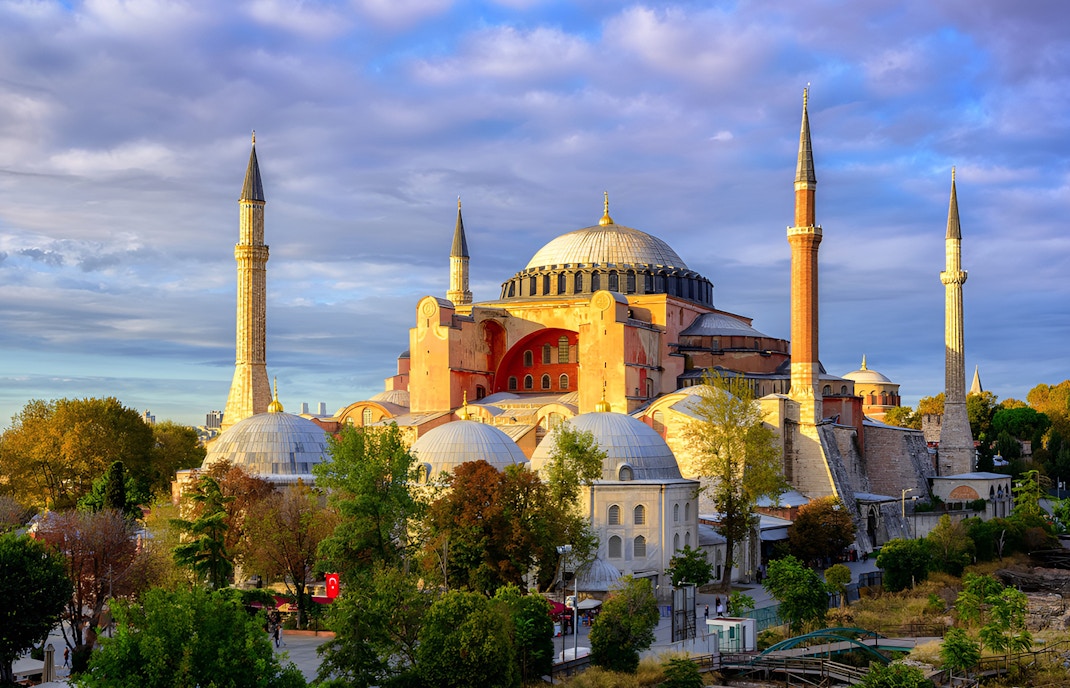
In 1934, the Blue Mosque underwent a significant restoration project to preserve its architectural integrity and beauty. The restoration addressed structural damage, cleaned and restored Iznik tiles, and maintained intricate calligraphy. Reopened to the public in 1952, the Blue Mosque showcased its renewed splendor, reaffirming its historical significance as a cultural and architectural gem that continues to captivate visitors with its timeless elegance and artistic magnificence.
Enduring legacy and cultural significance
1617-present
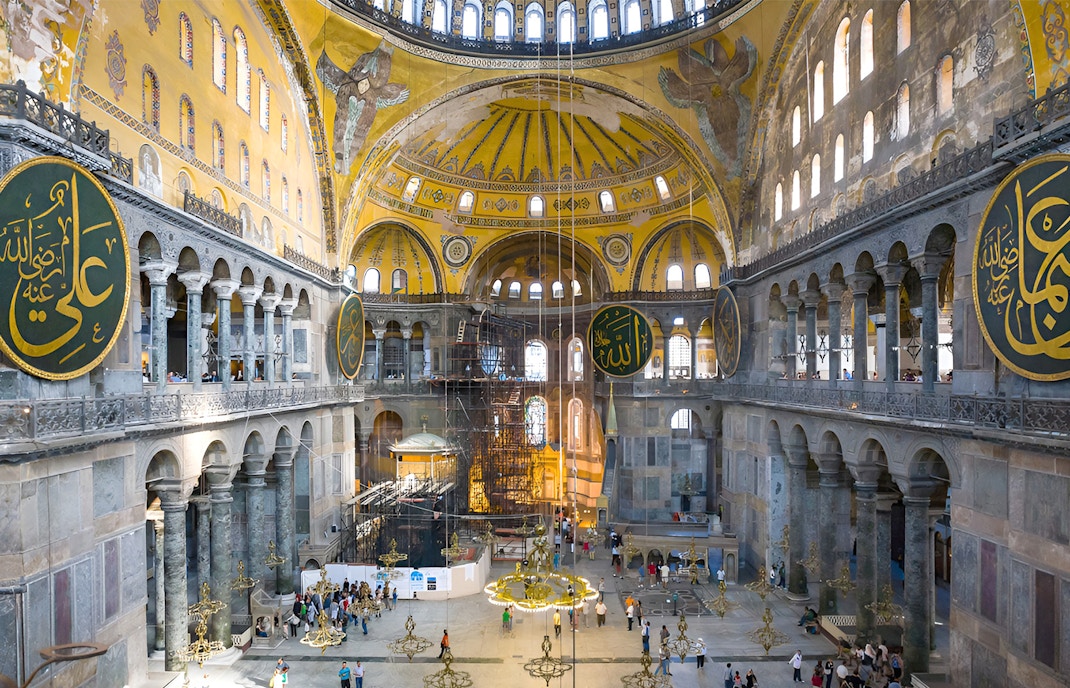
For centuries, the Blue Mosque has been a revered place of worship, providing a serene environment for prayer and reflection. As an iconic symbol of Istanbul, the mosque embodies Ottoman craftsmanship, standing proudly as a testament to Turkish culture. Its enduring allure continues to captivate both worshippers and tourists, preserving the city’s heritage and offering a glimpse into Turkey's vibrant history.
Construction of the Blue Mosque
The Blue Mosque’s construction began in 1609 under the reign of Sultan Ahmed I, who envisioned a mosque that would surpass even the Hagia Sophia. The task of designing and constructing this architectural masterpiece fell upon Mehmet Ağa, a renowned Ottoman architect known for his mastery of light, space, and intricate designs.
Mehmet Ağa drew inspiration from a variety of architectural styles, including Byzantine, Seljuk, and Ottoman, to create a unique and harmonious blend. The Blue Mosque took seven years to build and employed thousands of skilled workers.
The interior is adorned with over 20,000 exquisite Iznik tiles, creating a stunning tapestry of blue, green, and turquoise hues. The mosque's central dome, measuring 23.5 meters in diameter and soaring 43 meters high, is a masterpiece of Ottoman engineering. It boasts six slender minarets, a distinctive feature among Ottoman mosques inspired by the Prophet's Mosque in Mecca.
Blue Mosque today
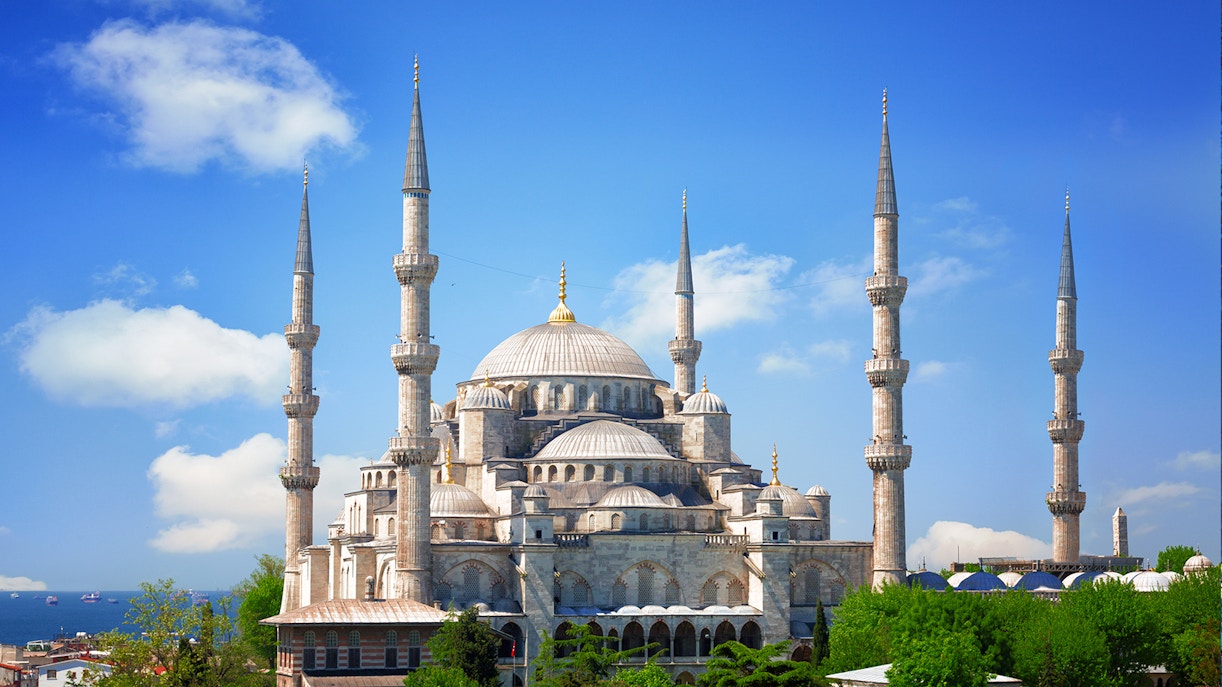
Today, the Blue Mosque stands as an iconic testament to Ottoman craftsmanship, and a cherished landmark of Turkish culture. It is a UNESCO World Heritage Site and is considered one of the most important mosques in the world. The mosque is still used as a place of worship, but it is also open to tourists.
The Blue Mosque dates back to the 17th century and is named after the blue tiles that cover its interior walls. The tiles were made in Iznik, a city in Turkey that was known for its pottery. There are over 20,000 tiles in the mosque, decorated with floral designs and calligraphy.
The Blue Mosque is a must-visit attraction for anyone visiting Istanbul. It is a beautiful and historic mosque that is sure to impress visitors. The mosque is located in the Sultanahmet district of Istanbul, which is also home to the Hagia Sophia and the Topkapi Palace.
Frequently asked questions about Blue Mosque's history
The Blue Mosque, officially named the Sultan Ahmed Mosque, is a testament to the grandeur of the Ottoman Empire during the reign of Sultan Ahmed I. Its construction, completed in 1616, marked a pivotal era in Ottoman history, reflecting the empire's cultural and artistic achievements.
The Blue Mosque was completed in 1617, making it approximately 415 years old as of today.
The construction of the Blue Mosque commenced in 1609 and spanned eight years, culminating in its completion in 1617.
The Blue Mosque's construction emerged during the reign of Sultan Ahmed I, a young and ambitious ruler seeking to revitalize the Ottoman Empire's prestige following military setbacks. The mosque's grandeur and innovative architectural features served as a symbol of the empire's enduring power and cultural vibrancy.
The architectural mastermind behind the Blue Mosque was Mehmet Aga, a renowned Ottoman architect revered for his mastery of light, space, and intricate designs. His vision and expertise brought to life the mosque's harmonious blend of Byzantine, Seljuk, and Ottoman architectural styles.
The Blue Mosque embodies a fusion of architectural styles, seamlessly blending elements of Byzantine, Seljuk, and Ottoman architecture. Its central dome, soaring minarets, and exquisite Iznik tilework exemplify the pinnacle of Ottoman architectural artistry.
Throughout its rich history, the Blue Mosque has witnessed significant events that have shaped its legacy. Its construction during the reign of Sultan Ahmed I marked a turning point in Ottoman architecture, while its restoration in the 20th century ensured its preservation for future generations.
The Blue Mosque stands as an iconic landmark of Istanbul, deeply intertwined with the city's cultural identity. Its architectural magnificence has made it a revered symbol of Ottoman heritage and a must-visit destination for visitors worldwide.
Yes, Blue Mosque guided tours are readily available for anyone seeking a deeper understanding of its history and architectural details. These tours provide insightful commentary, enabling visitors to fully appreciate the mosque's significance and beauty.
Mehmet Ağa, Blue Mosque’s lead architect is rumored to have been inspired by the Prophet's Mosque in Mecca when designing the six minarets. Additionally, the mosque's name, ‘Blue Mosque,’ derives from the exquisite blue Iznik tiles that adorn its interior.